Having relatives living in Australia is often seen as a major advantage when planning to study abroad. But does this advantage really make the process easier—or even mean you can be “sponsored” as many people assume? In reality, this is a common misunderstanding that leads to unrealistic expectations and less effective preparation.

1. Studying in Australia – Can Relatives Actually “Sponsor” You?
When exploring study options in Australia, many families believe that having relatives already living there makes the process easier. This assumption is not entirely wrong—but if interpreted as “having a sponsor guarantees visa approval,” it is inaccurate.
The key point to understand is: for the Australian student visa (Subclass 500), there is no legal concept of “sponsorship” in this sense. No individual—whether a close family member or relative—can guarantee that your visa will be granted.
The final decision always rests with the Australian Government’s Department of Home Affairs, based on the strength and credibility of your application.
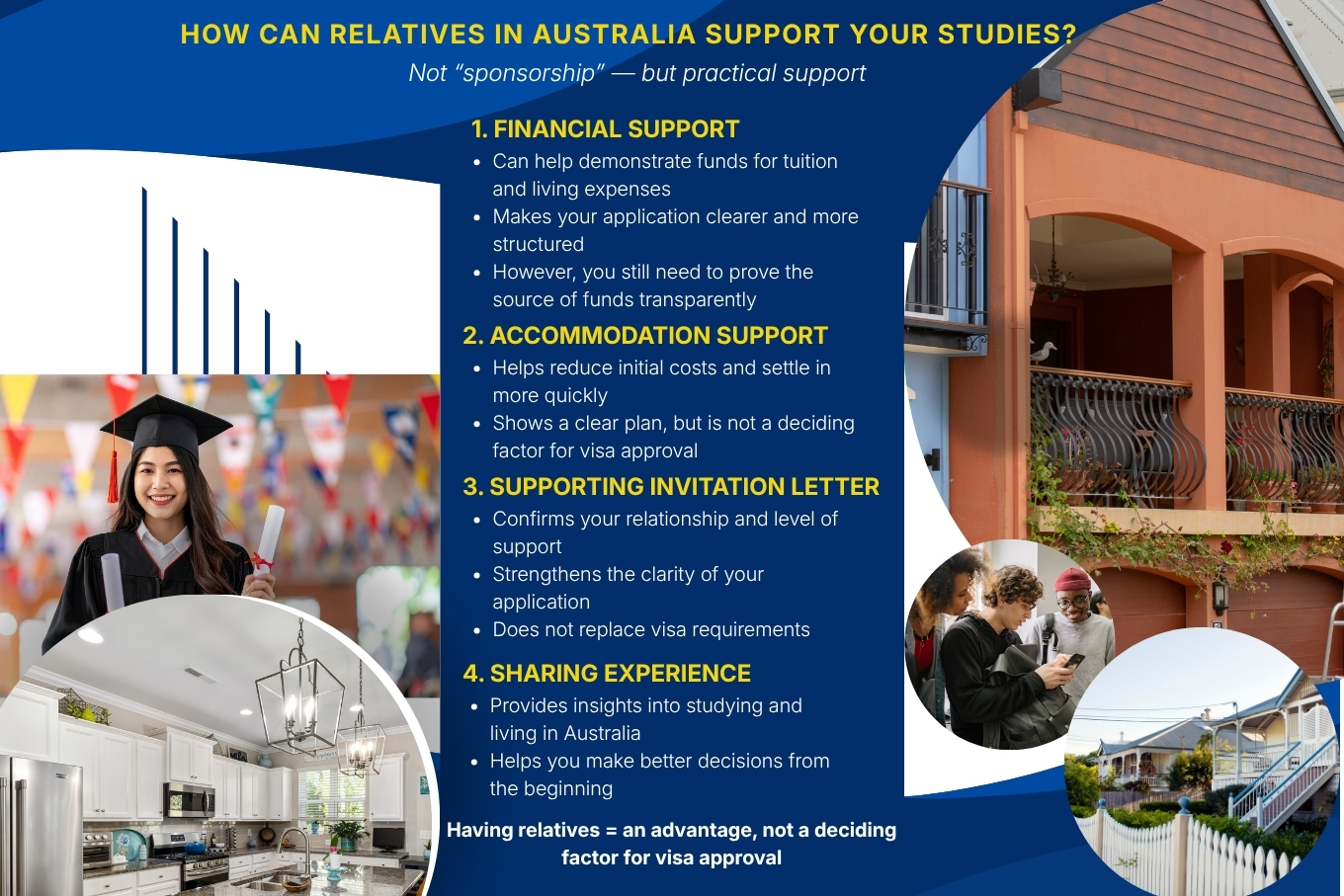
In other words, having relatives in Australia does not mean your application will be prioritised. You still need to independently meet all requirements. Any support from relatives is supplementary—it cannot replace your role in building a strong application.
2. Why Is This Misunderstanding So Common?
This confusion often comes from how families initially access and interpret information:
- Confusing different visa types
Many people unintentionally compare student visas with family reunion or migration visas, where sponsorship plays a central role. However, student visas are assessed based on study intentions, making the process fundamentally different. - Word-of-mouth influence
You may have heard statements like “It’s easier because they have family in Australia.” In most cases, those applicants already had strong profiles—the presence of relatives simply added credibility. - Mixing up “support” and “sponsorship”
These terms are often used interchangeably in everyday conversation, but they are completely different in a legal context.
>> Contact Next Gem today for a personalised consultation and start planning your study journey with confidence.