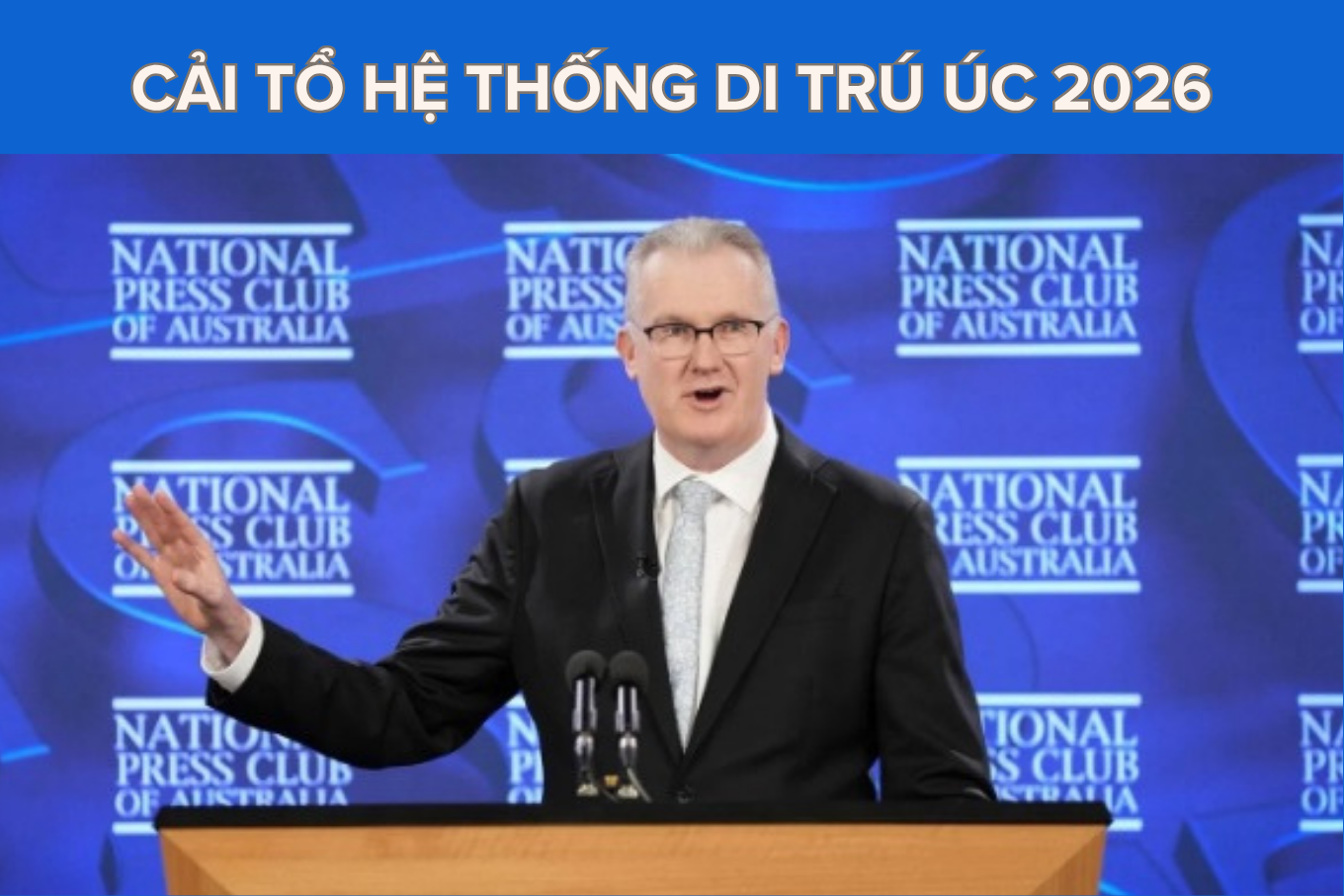
From early 2026, the Australian Government has introduced several updates to visa, study, and work policies aimed at improving the quality of international students and strengthening migration controls. Below are six key updates you should be aware of.

1. SSVF Changes in 2026: Stricter Student Visa Assessment
From 8 January 2026, the Australian Government updated how the Simplified Student Visa Framework (SSVF) is applied to enhance the assessment of international student visa applications.
Key updates:
- Some countries (such as India, Nepal, Bangladesh, and Bhutan) are now assessed at higher risk levels, typically Evidence Level 3 – the highest documentation requirement
- Evidence Level is determined based on both the applicant’s country and education provider, and is no longer fixed across all applications
- Stricter requirements for demonstrating financial capacity, English proficiency, and academic history
- Increased focus on assessing “Genuine Student” intent
- This is not a visa ban—applications are still processed if requirements are met
Impact:
- Student visa processing is becoming more rigorous and flexible
- There is no longer a “one-size-fits-all” application standard
- Students must check their Evidence Level at the time of application
- Incomplete or inaccurate applications are more likely to be delayed or refused
- While not directly applied to Vietnamese students, it reflects the overall tightening trend in Australia’s international education policies
Official source: (here)
2. Changes to Post-Study Work Visa (Subclass 485) and Fee Increase (Effective 1 March 2026)
The Australian Government has introduced important updates to the Temporary Graduate Visa (subclass 485), including changes to post-study work duration and application fees, aligned with the 2025–2026 Migration Strategy.
Key updates:
- End of COVID-era concessions: Post-study work rights return to standard durations:
- VET qualifications: up to 18 months
- Bachelor’s degree: 2–3 years
- Master’s degree: 1–2 years (depending on program)
- PhD: approximately 3 years
- Stronger alignment with labour market demand: Post-study work opportunities now depend more on occupation demand
- Visa application fee increase: From AUD 2,235 to approximately AUD 4,600 (effective 1 March 2026)
Impact:
- Post-study work duration is shorter than during COVID concessions, especially for Master’s graduates
- Staying in Australia after graduation becomes more competitive and dependent on field of study
- Higher costs require students to plan finances earlier
Official source: (here)
3. Australia Awards Scholarships 2027 Now Open (Fully Funded)
The Australian Government has officially opened applications for the Australia Awards Scholarships 2027 intake, available to eligible countries including Vietnam.
Key benefits:
- Full tuition coverage for the entire study duration
- Living allowance to cover accommodation, food, and daily expenses
- Return airfare upon completion of the program
- Overseas Student Health Cover (OSHC) for the full study period
Impact:
- A valuable opportunity for Vietnamese students seeking to study in Australia with reduced financial burden
- Highly competitive due to full government funding, requiring strong academic performance, experience, and clear study goals
Official source: (here)
4. Occupation Ceilings Announced for Skilled Migration 2025–2026
The Australian Government has released Occupation Ceilings, which set limits on the number of visa applications processed for each occupation under skilled migration programs.
Key updates:
- Applies to skilled migration visa categories
- Each occupation has an annual cap
- High-demand occupations offer greater opportunities, while oversupplied fields face higher competition
Impact:
- Directly affects migration opportunities depending on the chosen field
- Students are advised to prioritise in-demand occupations to improve their chances of working and settling in Australia
Official source: (here)
5. New Process for Training Visa (Subclass 407) Applications (Effective 11 March 2026)
From 11 March 2026, new requirements apply to the Training Visa (subclass 407), which is designed for workplace-based training or internship programs in Australia.
Key updates:
- Applications can no longer be submitted simultaneously
- Visa application is only valid after:
- The sponsor is approved (Temporary Activities Sponsor)
- The training nomination is approved
- Applications submitted without completing both steps will be considered invalid and refunded
- The new process aims to ensure the visa is used for genuine training purposes
Impact:
- Longer preparation time due to step-by-step requirements
- Applicants must coordinate early with sponsors to avoid delays
- Non-compliant applications are likely to be refused
Official source: (here)
6. VETASSESS Updates to Skills Assessment (Effective 30 March 2026)
VETASSESS has announced significant updates to skills assessment programs (OSAP and TSS), based on guidance from Trades Recognition Australia.
Key updates:
- Temporary suspension of Stage 1 applications from 13 March to 30 March 2026
- Online application system unavailable from 13 March to 23 March 2026
- Two occupations removed from assessment: Fitter-Welder and Pastrycook (from 30 March 2026)
- New fee structure applies to all applications submitted from 30 March 2026
Impact:
- Applications cannot be submitted during the suspension period
- Some occupations are no longer eligible for skills assessment
- Assessment costs may increase
- Indicates stricter control over skills assessment processes
Official source: (here)
Insights & Trends: What Do These Changes Mean for Studying in Australia in 2026?
The updates introduced in early 2026 clearly show that Australia is shifting towards a more selective and tightly controlled approach to international education.
Key trends include:
- Stricter entry requirements and assessment processes
From SSVF updates to visa and skills assessments, applications now require clearer documentation and genuine study intent. - Stronger alignment between education and labour market needs
Post-study visas, occupation ceilings, and skills assessments increasingly prioritise fields with workforce shortages. - Higher costs and reduced concessions
Increased visa fees and shorter post-study work rights indicate that studying in Australia requires more strategic planning and investment.
Future Outlook
- Visa policies are likely to continue evolving based on labour market demands
- High-demand fields such as healthcare, engineering, and community services will offer stronger opportunities
- Students will need to prepare more carefully from the beginning to avoid delays or visa refusals
If you are planning to study in Australia in 2026, staying updated with policy changes and building a clear study pathway will be key to success.
>> Follow Next Gem for the latest updates and personalised advice on study and career pathways in Australia.