Many international students choose to work part-time while studying in Australia to earn additional income and gain valuable work experience. However, beyond finding a suitable job, understanding your workplace rights is equally important.
In reality, some international students are paid below the legal minimum wage or do not receive their full employment entitlements simply because they are unfamiliar with Australian workplace laws. For this reason, learning about your basic rights before starting a job is essential to protect yourself and avoid unnecessary risks.

1. Minimum Wage for International Students Working in Australia
When working part-time in Australia, international students have the right to receive at least the minimum wage set by Australian law. This is a fundamental workplace entitlement that applies to all employees, including international students.
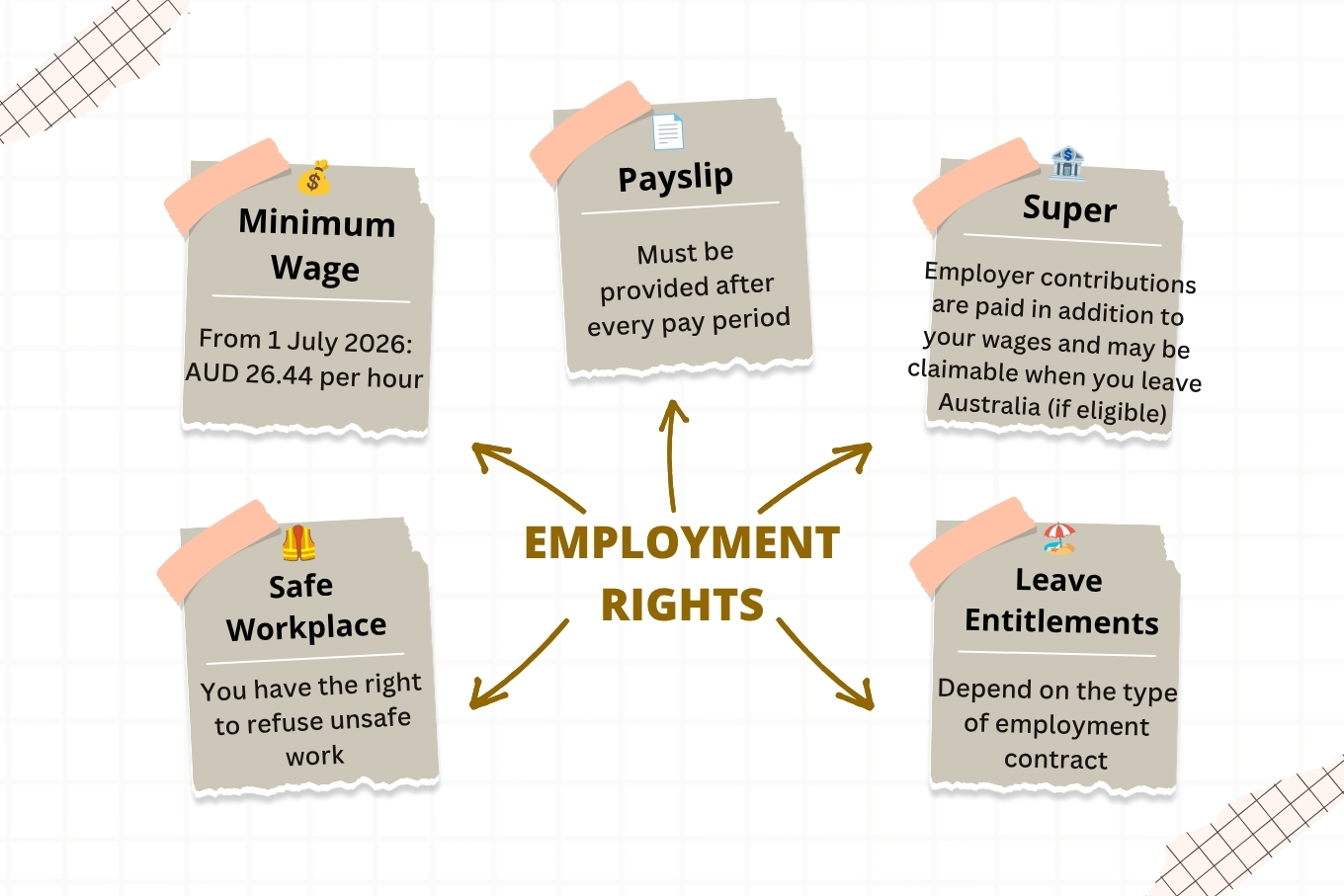
According to the latest update from the Fair Work Commission, from 1 July 2026, Australia’s National Minimum Wage is AUD 26.44 per hour, equivalent to AUD 1,004.90 per week.
However, actual pay rates may vary depending on factors such as the type of job, age, experience, and working hours. Before accepting a position, students should clarify the pay rate, payment method, and keep relevant employment records to ensure their rights are protected.
Employers cannot legally pay you less than the minimum wage simply because you are an international student. Australian wage regulations are publicly available and regularly updated on the Fair Work website, allowing workers to verify their pay and entitlements when necessary.
2. Payslips: An Important Document Often Overlooked
After each pay cycle, employees in Australia typically receive a payslip.
Many international students focus only on the amount deposited into their bank account and pay little attention to this document. However, a payslip is one of the most important records for checking whether your employment rights are being respected.
A payslip generally includes information such as hours worked, the applicable pay rate, tax deductions, and contributions made to your superannuation fund. It allows employees to verify that they have been paid correctly and in full.
In practice, some students have discovered underpaid wages or missing work hours simply by reviewing their payslips carefully. On the other hand, failing to keep payslip records can make it much harder to prove your entitlement if a workplace dispute arises.
By law, employers must provide employees with a payslip after each pay period. If you do not receive one or the information appears unclear, you should proactively ask your employer for clarification. Detailed information about payslips and workplace rights for international students can also be found through official Australian Government education resources.
3. Superannuation (Super): A Financial Benefit International Students Should Not Ignore
In addition to wages, international students working in Australia may also receive employer contributions to a Superannuation (Super) fund. This is a separate retirement savings contribution and forms part of an employee’s workplace entitlements in Australia.
Many students focus primarily on their weekly take-home pay and overlook their Super contributions. However, for those who work over an extended period, the accumulated amount can become quite substantial.
Importantly, after completing their studies and leaving Australia, many international students may be eligible to claim their accumulated Super through the Australian Government’s Departing Australia Superannuation Payment (DASP) program.
For this reason, students should regularly check their payslips to ensure their employer is making the required Super contributions. This is a legal entitlement that many international students unintentionally overlook.
4. Are International Students Entitled to Leave Benefits?
The answer is yes. However, leave entitlements depend on the type of employment contract you have with your employer.
Employees working under full-time or part-time permanent arrangements may be entitled to benefits such as annual leave, personal leave (sick leave), and carer’s leave under Australian workplace laws.
However, most international students work under casual employment arrangements. In casual roles, certain forms of paid leave generally do not apply. Instead, employees usually receive a casual loading, which is incorporated into their hourly pay rate to compensate for the absence of these leave benefits.
Therefore, when starting a new job, international students should understand the type of employment contract they are signing and what leave entitlements apply to their specific situation.
5. You Have the Right to Refuse Unsafe Work
Many international students worry that refusing a request from an employer may put their job at risk. However, Australian workplace laws do not require employees to work in conditions that may endanger their health or safety.
Every worker has the right to a safe workplace and appropriate training before performing job-related tasks.
An unsafe workplace may include situations where employees are not provided with necessary protective equipment, are required to operate machinery without adequate training, or are regularly exposed to hazards without proper safety measures.
Beyond workplace safety, Australian employees are also protected from harassment, discrimination, and bullying in the workplace.
If international students encounter these situations, they can seek assistance from the appropriate authorities without affecting their legal right to work in Australia.
Important Things to Remember When Looking for a Part-Time Job in Australia
In addition to understanding workplace rights, international students should take proactive steps to protect themselves throughout the job search process. Before accepting any position, take the time to review working conditions carefully and consider the following:
- Request a clear employment contract: Before starting work, understand your employment type, pay rate, and working conditions.
- Check that payslips are provided: After each pay period, employers should provide a payslip detailing hours worked, wages paid, and relevant deductions.
- Be cautious of jobs offering below-award pay: If the proposed pay rate appears significantly lower than industry standards or legal requirements, investigate carefully before accepting the role.
- Comply with student visa work conditions: International students must follow visa work restrictions (currently 48 hours per fortnight during study periods and unrestricted hours during approved study breaks). Compliance helps avoid legal risks and supports a transparent study and employment record in Australia.
- Keep employment records: Save copies of employment contracts, payslips, and important work-related communications for future reference.
If you experience workplace issues or believe your rights are not being respected, you can contact the Fair Work Ombudsman for guidance and support in accordance with Australian law.
Understanding Your Rights Leads to a Better Work Experience
Working part-time in Australia provides international students with valuable opportunities to gain experience, develop practical skills, and reduce financial pressure while studying. However, understanding your workplace rights is essential to ensuring a positive and rewarding employment experience.
Are you planning to study in Australia, exploring part-time job opportunities, or looking for a study pathway that aligns with your future career goals?
>> Contact Next Gem today for personalised advice on study pathways and opportunities that support your long-term goals and career aspirations.