Australia’s rental market is highly competitive—especially in major cities like Sydney, Melbourne, and Brisbane. For international students, limited experience combined with the pressure to secure accommodation quickly can often lead to costly mistakes during the rental process.
These mistakes may result in:
- Unexpected additional expenses
- Difficulty getting your bond back
- Or a negative overall living experience in Australia
Below are 8 common mistakes, along with a practical checklist to help you rent safely and more effectively in Australia.
1. Skipping Property Inspections
Many students, either to save time or because they are still overseas, choose to place a deposit based solely on online photos. However, images can be outdated or heavily edited.
Without inspecting the property in person, you may miss critical issues such as mould, faulty utilities, or noise levels.
If you cannot attend an inspection yourself, request a detailed video walkthrough covering all areas (bedroom, kitchen, bathroom, shared spaces), or ask a trusted friend in Australia to inspect on your behalf before committing.
2. Not Signing a Written Lease Agreement
Verbal agreements offer no legal protection in the event of a dispute. Renting without a formal Tenancy Agreement leaves you vulnerable and without clear rights or obligations.
3. Transferring a Deposit Without Verifying the Landlord
This is one of the most common rental scams. Fraudsters often advertise attractive properties at below-market prices and pressure tenants to transfer a deposit urgently.
Never transfer money before meeting the landlord or authorised agent and signing a formal agreement.
4. Ignoring the Condition Report
In Australia, you will receive a Condition Report when moving in. Failing to thoroughly review and document existing damage (e.g. wall marks, stained carpets, leaking taps) can result in unfair bond deductions when you move out.
5. Misunderstanding the Bond
The bond is typically equivalent to four weeks’ rent. By law, landlords must lodge this payment with the relevant state authority (e.g. RTBA in Victoria or RBO in NSW), not keep it themselves.
You should always receive an official confirmation from the relevant authority.
6. Overlooking Additional Costs
Many tenants assume rent includes utilities such as electricity, water, gas, and internet. If this is not clearly stated in the agreement, you may end up paying hundreds of dollars extra each month.
7. Not Researching Location and Safety
Choosing accommodation far from campus to save money can lead to higher commuting costs and longer travel times.
Additionally, failing to assess the safety of the neighbourhood—especially at night—can put you at risk.
8. Breaching Occupancy Limits (Overcrowding)
Australian properties have strict occupancy regulations. Exceeding the allowed number of tenants to reduce rent can result in lease termination and negatively impact your rental history.
Key Takeaway
In most cases, rental issues in Australia don’t come from major decisions—but from small details that are often overlooked during the process.
By understanding these common mistakes early on, you can take a more proactive approach and avoid unnecessary risks.
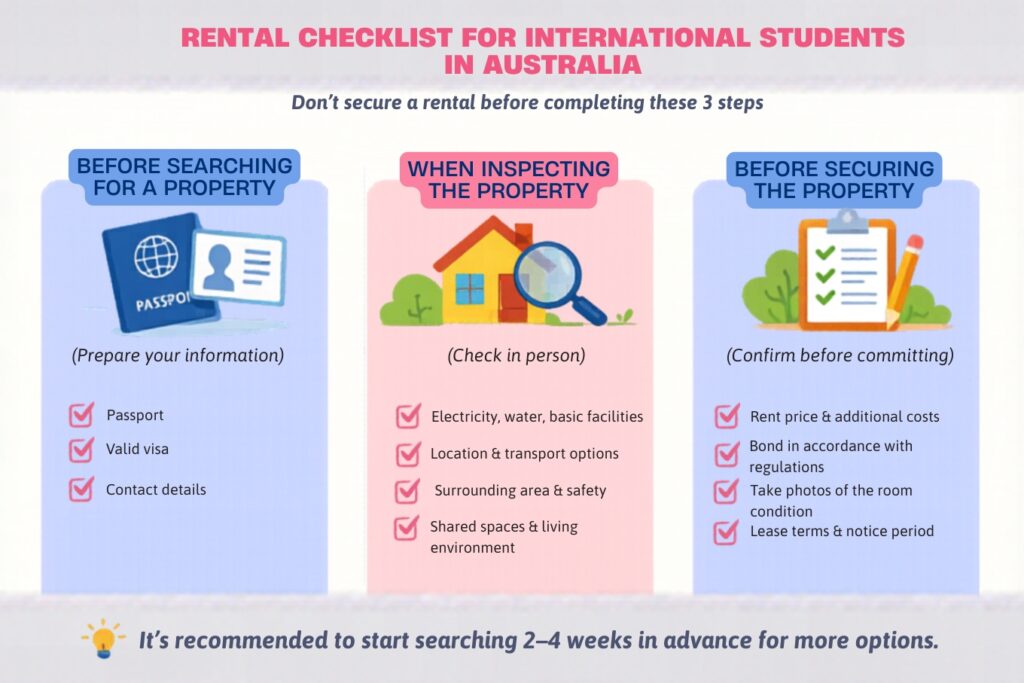
Rental Checklist for International Students in Australia
In reality, finding accommodation in Australia often involves processing a large amount of information in a short time. Without a clear checklist, it’s easy to overlook important details—one of the main reasons many students encounter issues shortly after arriving.
To help you stay organised and make informed decisions, here is a practical checklist compiled by Next Gem:
Final Thoughts
From a practical perspective, rental risks in Australia are rarely about choosing the wrong type of accommodation. Instead, they stem from a lack of information or skipping essential checks before committing.
When you understand common pitfalls and follow a structured checklist, the process becomes significantly safer and more manageable—especially during your initial transition when everything is still new.
>> Contact Next Gem today to receive personalised guidance and build a study pathway aligned with your future goals!